

As temperatures drop and winter begins to settle in, staying active outdoors requires thoughtful preparation. Cold weather running isn’t just about layering — it’s about choosing gear made from materials that help you stay warm, dry, and comfortable while maximizing performance. Whether you’re headed out for a brisk morning run or a mountain trek, understanding the key components of effective cold-weather gear can make all the difference between a great workout and a miserable, uncomfortable experience.
Selecting the right fabrics is essential in cold-weather gear. Natural fibers like cotton, although comfortable, tend to trap moisture and lose insulating properties when wet, leading to chills and discomfort. Instead, focus on technical fabrics designed for active use—such as polyester or merino wool, materials—that wick sweat away from your skin, dry quickly, and maintain warmth even when damp. These materials ensure you stay dry and thermally regulated, preventing overheating while you’re running and getting cold when you stop.
The foundation of successful winter running wear is a moisture-wicking base layer. Look for lightweight tops made of synthetic fibers like polyester or merino wool, which pull sweat away from your skin and prevent it from cooling you down. Layer these with a mid-layer (like a fleece or thermal shirt) for insulation, and finish with an outer shell that’s windproof, water-resistant, or waterproof depending on the conditions.
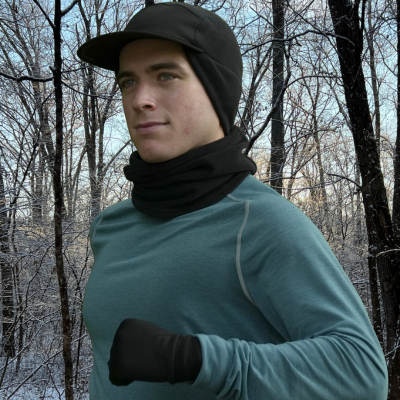
A high-quality men’s winter hat is essential for protecting against rain, snow, and wind without sacrificing breathability. Look for features like moisture-wicking fabrics, ventilation options, and a drop-down fleece ear warmer to regulate temperature. The TrailHeads’ Waterproof Rain Hat provides excellent protection; its moisture-wicking microfleece lining keeps your head dry, and the fleece ear warmer can be flipped up or down to help you stay comfortable no matter the weather.

The Essentials: Hats, Gloves, and Socks
Hats: Your head loses a significant amount of body heat, so protecting it is crucial. Lightweight fleece caps with a drop-down shield, like the Trailblazer Adventure Hat, are excellent choices. They provide warmth, protect your ears and neck, and are quick-drying and breathable. For colder conditions, a merino wool beanie offers natural insulation, odor resistance, and moisture-wicking properties, all while remaining soft and comfortable.
Gloves: Keeping your hands warm and functional is vital, particularly if you use your smartphone or need dexterity. Men’s winter gloves like the TrailHeads Men’s Insulated Convertible Mittens provide warmth with Primaloft Cross Core Gold insulation while allowing you to convert them into fingerless gloves for tasks like taking photos or adjusting gear. For lighter conditions, men’s running gloves such as the TrailHeads Men’s Touchscreen Running Gloves are perfect; their moisture-wicking fabric, dexterity, and conductive fingertips keep you connected without exposing your hands to the cold.
Socks: Feet are often overlooked, but they are just as vulnerable to cold and moisture. Opt for moisture-wicking, thermal socks made from merino wool or synthetic fibers designed specifically for running. These keep your feet dry and warm, preventing blisters caused by dampness and cold.
Balancing Insulation and Breathability
Many runners ask: what kind of insulation should I look for? The key is to balance warmth with moisture management. Insulating technology—such as Primaloft or DuraPU®—represents a smart choice because it provides effective insulation without adding bulk or weight. Resist heavy, non-breathable insulations that trap sweat and leave you feeling clammy. Instead, choose lightweight, high-tech insulation that works with your body’s heat and moisture.
In contrast, avoid overly thick or bulky gear that restricts movement or causes you to overheat. Always consider the activity level and conditions—that light drizzle in the morning might warrant different gear than a clear, dry trail.
The Role of Proper Layering & Post-Run Care
Layering isn’t just layering. It’s about understanding your activity, environment, and body’s response. Start with a moisture-wicking base layer, add insulation if needed, and then shield yourself against wind and rain with a technical outer layer. Adjust layers as your effort level fluctuates and always pack an extra piece of gear—such as an extra layer or waterproof shell—to adapt to changing weather.
Caring for your gear properly extends its lifespan and maintains its performance. After each run, wash your technical apparel in cold water, using a gentle cycle and avoiding fabric softeners, which can clog the fibers and reduce moisture-wicking ability. Air-dry your gear to prevent shrinking or damage caused by heat.
Final Tips
- Invest in gear made specifically for runners: These products are designed with activity-specific features like reflective accents, moisture-wicking fabrics, and ergonomic fits that enhance comfort and safety during winter workouts.
- Prioritize moisture management: Proper layering with moisture-wicking base layers, breathable mid-layers, and windproof outer shells keeps sweat away from your skin, preventing chills and chafing.
- Choose the right insulation: Look for lightweight, high-tech insulators like Primaloft or DuraPU® that offer warmth without bulk. Avoid heavy or non-breathable materials that trap moisture and cause you to feel clammy.
- Don’t forget your feet: Invest in thermal, moisture-wicking socks designed for running to keep your feet dry and prevent blisters.
- Layer strategically: Always begin with a moisture-wicking base layer, add insulation as needed, and top with a windproof or waterproof outer shell. Adjust layers as your effort or weather conditions change throughout your run.
- Proper gear care: Wash your technical gear in cold water, avoid fabric softeners, and air dry to prolong its lifespan and maintain optimal performance.
- Listen to your body: If you start feeling too hot or too cold, adjust your layers accordingly. Overdressing can be as problematic as underdressing.
By carefully selecting your gear and layering properly, you’ll be able to enjoy a safe, comfortable winter running experience—no matter how low the temperatures drop.
Happy running!