
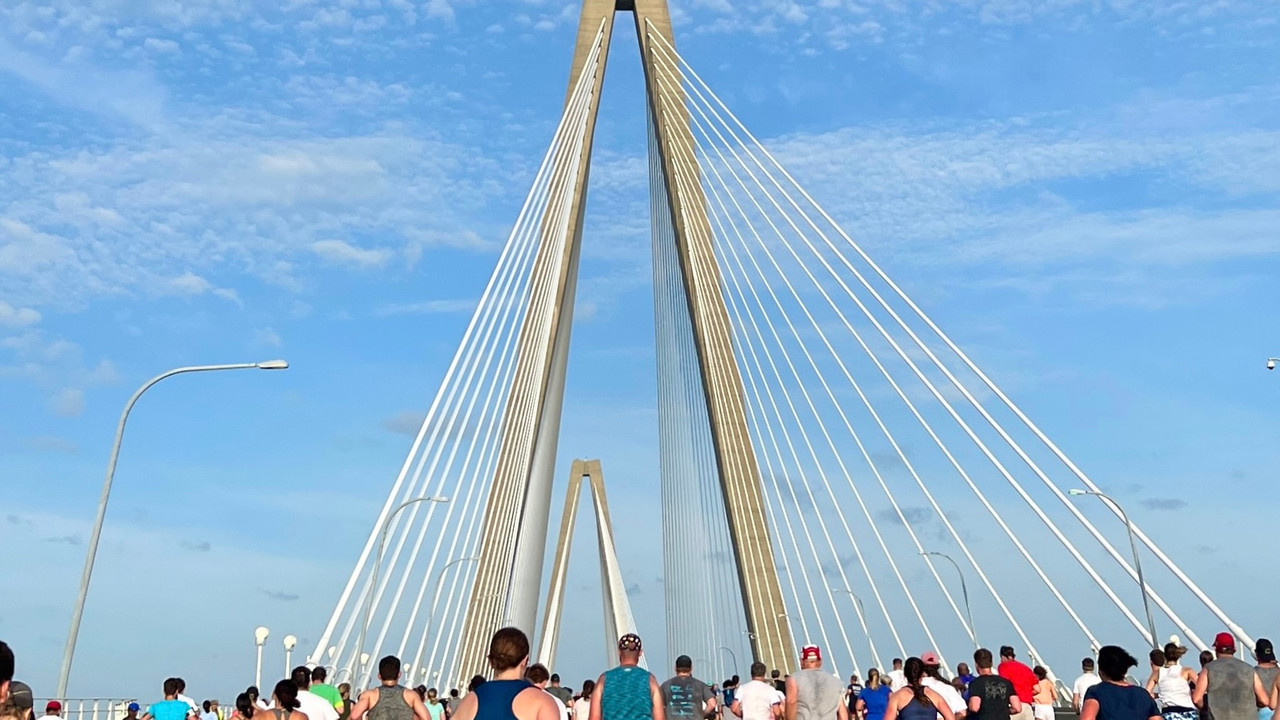
The Cooper River Bridge Run is one of the most popular 10K races in the country with nearly 40,000 participants each year, including TrailHeads CoFounders Stephanie & Ed Raftery. As a Connecticut based brand built by runners, we test our gear and training strategies in a wide range of conditions, from winter weather runs to warm, humid races like this one. Here are our tips on how to train for this, or any 10k!

What makes the Cooper River Bridge Run different
What makes it unique is the mix of runners and changing conditions. You will see elite athletes, casual runners, walkers, and first timers all on the same course. You also may get sun, humidity, and a steady ocean breeze as you cross the bridge.
The energy is high, but the race is not easy!
The long bridge climb, combined with the Charleston humidity, makes a race that can feel much harder than your typical 10K. If you are preparing for this race, your training should go beyond just running the distance.
These tips will help you prepare for the Cooper River Bridge Run, and they also apply to any hot weather 10K with hills or sustained inclines.
At first glance, this looks like a standard 10K. Then you hit the bridge. The Arthur Ravenel Jr. Bridge has a long, steady climb. The incline reaches over 5 percent at its steepest point and lasts close to a mile. You face the climb right in the middle of the race. This changes how you should prepare. Any race with a long incline and warm conditions will feel similar. Effort matters more than pace, and strength matters as much as endurance.
How to train for the bridge
If you are preparing for a run like this, hill training is one of the most effective things you can do. Start by adding one hill workout per week.
Hill repeats:
Run uphill for 60 to 90 seconds. Walk or jog down to recover. Repeat 5 to 8 times.
Incline treadmill runs:
Set your treadmill to a 3 to 5 percent incline and run at a steady pace for 10 to 20 minutes.
Rolling routes:
Run routes with gentle elevation changes to build strength over time.
You do not need steep terrain to see results. Consistent incline work prepares your legs for race day.
Build endurance for a 10K
Along with hill work, you need a solid endurance base.
A simple weekly structure works well.
- One longer run, 4 to 6 miles at an easy pace
- One workout, hills or intervals
- One steady run at a comfortable pace
- Optional easy run for recovery
If you are newer to running, focus on time instead of distance. Running consistently for 30 to 45 minutes builds a strong foundation.
This approach works for any 10K, especially ones with heat or elevation.

Prepare for Charleston Temperatures and Humidity
Charleston weather can feel mild, but humidity adds difficulty. Even when temperatures look comfortable, your body has to work harder to cool itself. To prepare, hydrating consistently throughout the week leading up to the race. Training in similar conditions, in the mornings or in humid weather when possible also makes a difference. Adjusting your expectations for the race, and understanding it may be slower than in dry conditions is also important for your mental game. With any warm weather race, effort will feel higher, especially in the later miles.
Pacing
Pacing is one of the most important parts of preparing for a run like this. It is easy to start out too fast. The start is flat and the energy is high.
A better approach:
Start controlled.
Run the first mile slightly below your goal pace.
Climb with effort.
Focus on steady effort instead of chasing a pace on the bridge.
Use the downhill.
Let gravity help, but stay relaxed and in control.
Finish strong.
Gradually increase your pace if you have energy left.
This pacing strategy works well for any race with a major incline in the middle.
What to wear for a warm, hilly 10K
The conditions will change throughout the race. Wind on the bridge can pick up due to the ocean breeze, you may start cool and finish warm. Choose gear that adapts.
Lightweight Layers
You want to start comfortable without overheating later.
Breathable Materials
Humidity makes airflow important to help wick sweat and cool you.
Secure Accessories
Wind on exposed sections like bridges can affect comfort.
A quick-drying and lightweight running hat can help regulate temperature early in the race and cool you down as you warm up. TrailHeads has many lightweight and quick-drying options available, like the Women’s Race Day Running Hat, Men’s 5 Panel Ridge Runner Hat, or the Women’s Recycled Running Cap.

Practice your Race Routine
Preparing for a run is also about routine.
Before race day:
- Run at a similar time
- Test your outfit and gear
- Practice your pre run food and hydration
This helps you avoid surprises, and feel more confident going into the race.
Mental strategy for the bridge
The bridge is the most challenging part of the race. Break it into smaller sections. Focus on reaching a point ahead instead of the top.
Expect it to feel hard. That is part of the race. Once you reach the top, you are set up for a strong finish.
Cooper River Bridge Run Checklist
Use this checklist the week before the race.
- Training
- Complete your last run about a week out
- Reduce mileage slightly before race day
- Hydration
- Drink water daily
- Add electrolytes if needed
- Gear
- Plan your outfit in advance
- Prepare for warm and humid conditions
- Pacing
- Set a realistic goal
- Plan for a slower pace on the incline
- Rest
- Prioritize sleep leading into race day
- Mindset
- Expect the climb
- Stay patient early
The Cooper River Bridge Run is a unique race, but the lessons carry over.
If you train for incline, adjust for humidity and pace yourself well, you will be prepared not just for this race, but for any warm weather 10K with hills. Our training and testing in a wide range of conditions has made it clear that small adjustments in training and gear can make a big difference on race day.